Maintaining Navigable Waterways
Maintain Depth, Access, and Waterway Function
Over time, sediment, sand, and organic material naturally accumulate within canals, marinas, and waterways. This buildup can reduce water depth, restrict marine access, and impact long-term waterway functionality.
Dredging restores proper depth and helps maintain reliable marine access for vessels, marinas, canal systems, intracoastal waterways, and surrounding waterfront infrastructure.
Every Waterway Requires a Different Approach
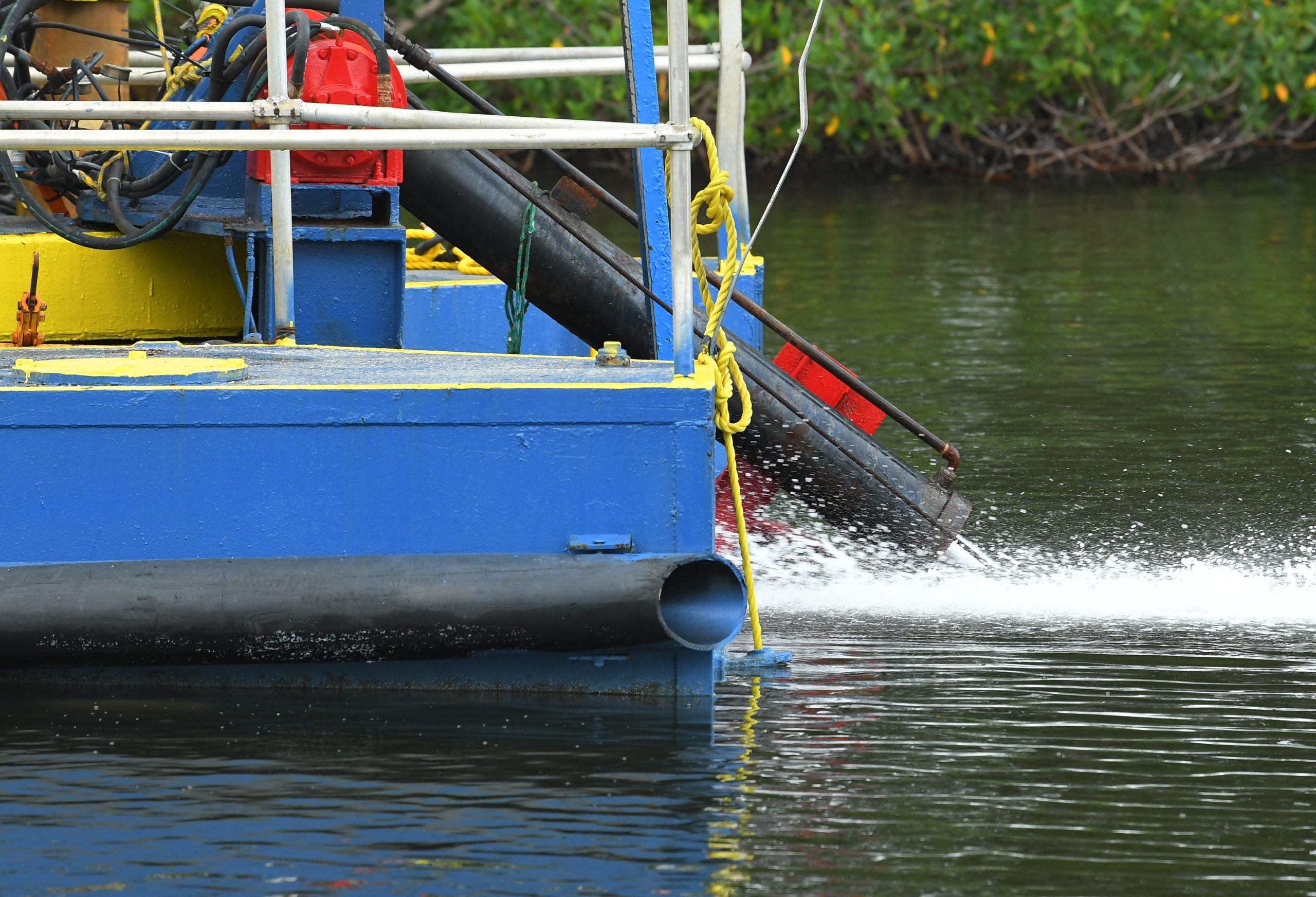
Every waterway presents different sediment conditions, access constraints, and subsurface challenges. Ultramarine evaluates each project to determine the most effective dredging approach for long-term marine access, navigability, and waterway performance.
As a self-performing contractor with our own marine equipment, our team can adapt to changing site conditions and address difficult obstructions, hard-bottom areas, and embedded material without relying on third-party operators. This allows for more efficient execution, reduced delays, and greater control across active waterways, marinas, canal systems, municipal channels, and waterfront infrastructure projects.
Dredging projects generally call for one of two methods: mechanical or hydraulic. The right choice comes down to site access, material type, and project scale.
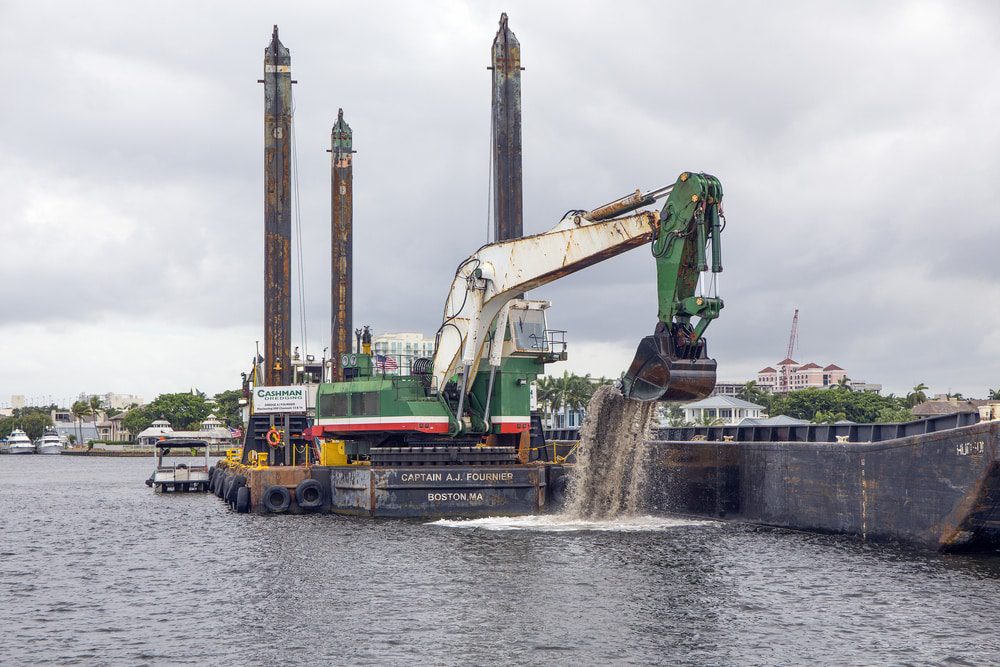
What is Mechanical Dredging?
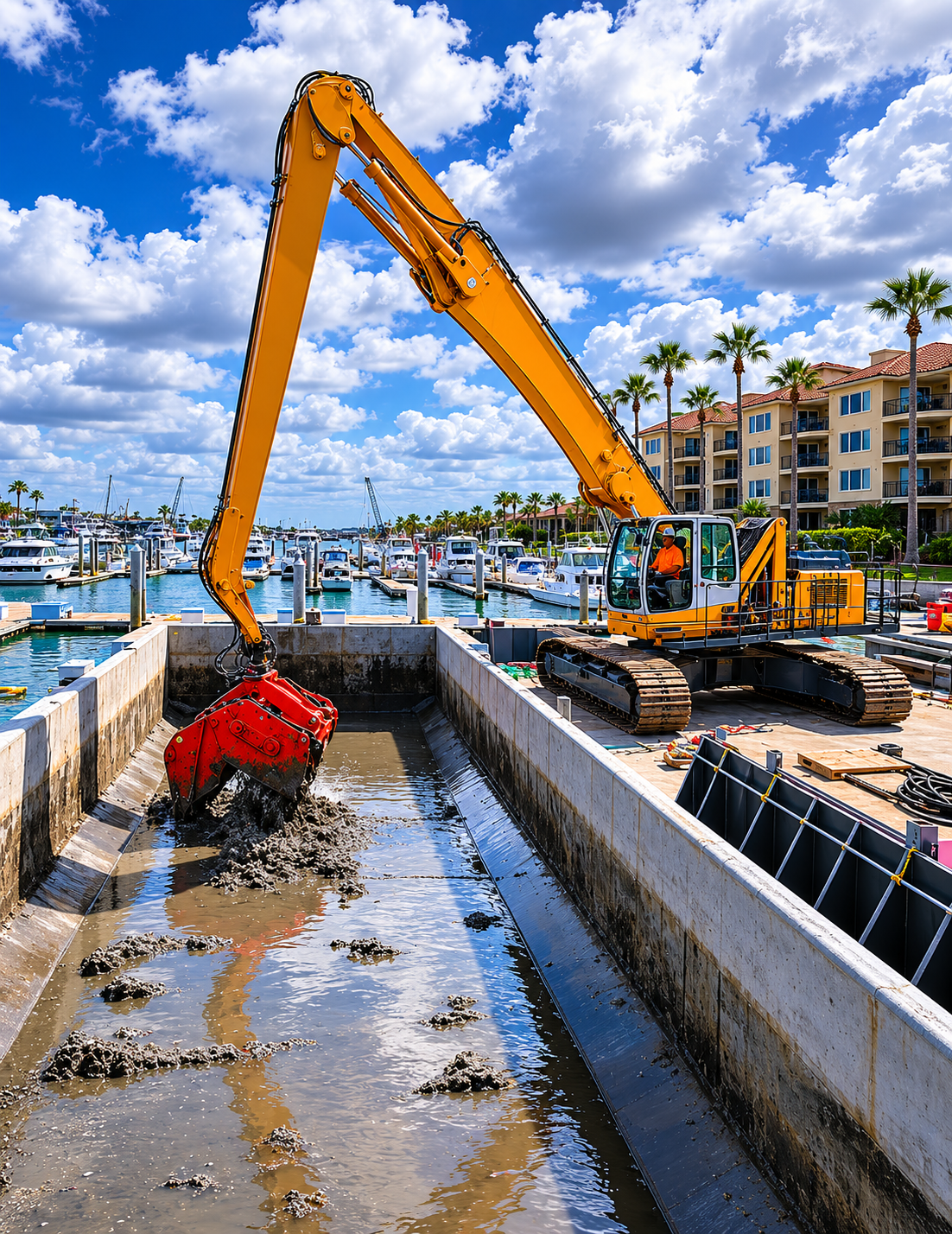
Mechanical dredging uses a barge-mounted excavator or clamshell bucket to scoop sediment and lift it out at its natural density. It’s the right approach when access is tight or the material is too tough for suction equipment.
Best suited for:
- Confined, nearshore areas: marina slips, docks, seawalls, and bridge piers
- Hard or coarse material: rock, clay, gravel, and compacted sediment
- Debris-laden bottoms: pilings, rubble, and trash that would clog a hydraulic dredge
- Smaller, defined volumes: targeted removal
- Contaminated sediment: easier containment and disposal
What is Hydraulic Dredging?
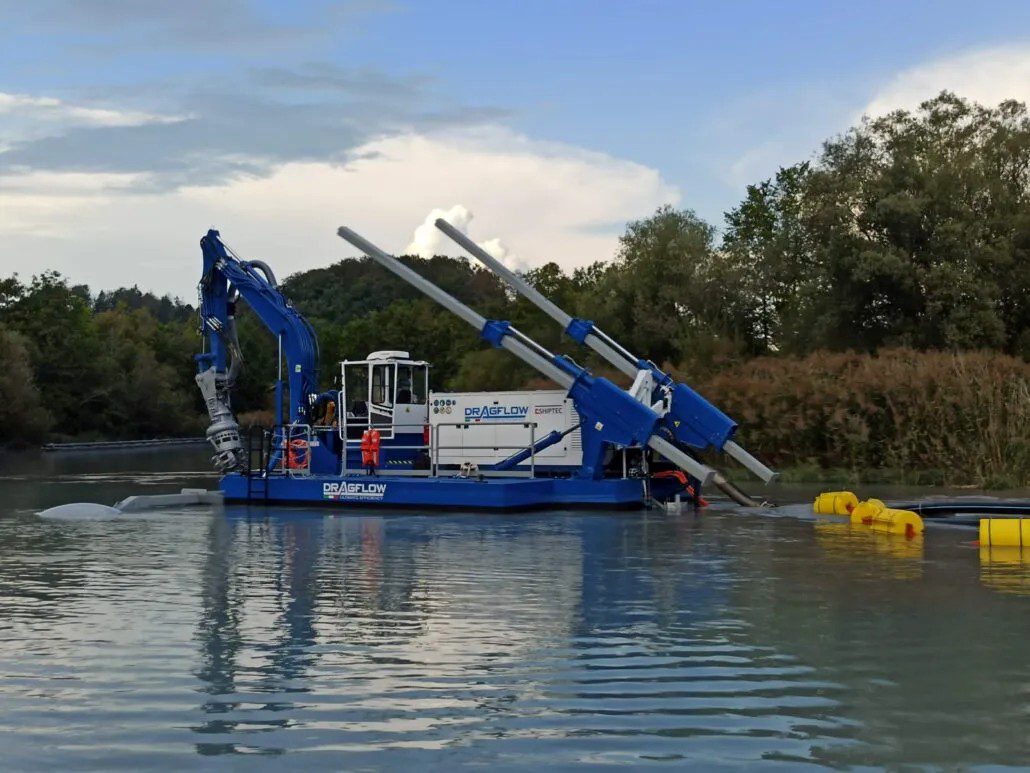
Hydraulic dredging uses a cutterhead and suction pump to move sediment as a water slurry through a pipeline directly to the placement site. It’s the most efficient method for large volumes of soft material over open water.
Best suited for:
- Large open-water areas: channels, basins, and wide intracoastal stretches
- Soft, fine material: silt, sand, and loose sediment
- Longer disposal distances: pipeline transport thousands of feet without barging
- High-volume removal: sustained throughput on bigger jobs
- Beach nourishment and land reclamation: sediment placed and shaped on site
Our Dredging Process

Site Evaluation

Planning & Permitting

Dredging & Material Removal

Final Grading & Inspection
Built for Coastal and Canal Systems
Coastal waterways are constantly shifting due to tides, storms, and natural sediment movement. Ultramarine understands these conditions and delivers dredging solutions that align with both environmental considerations and long-term property use.
Supporting a Range of Waterways
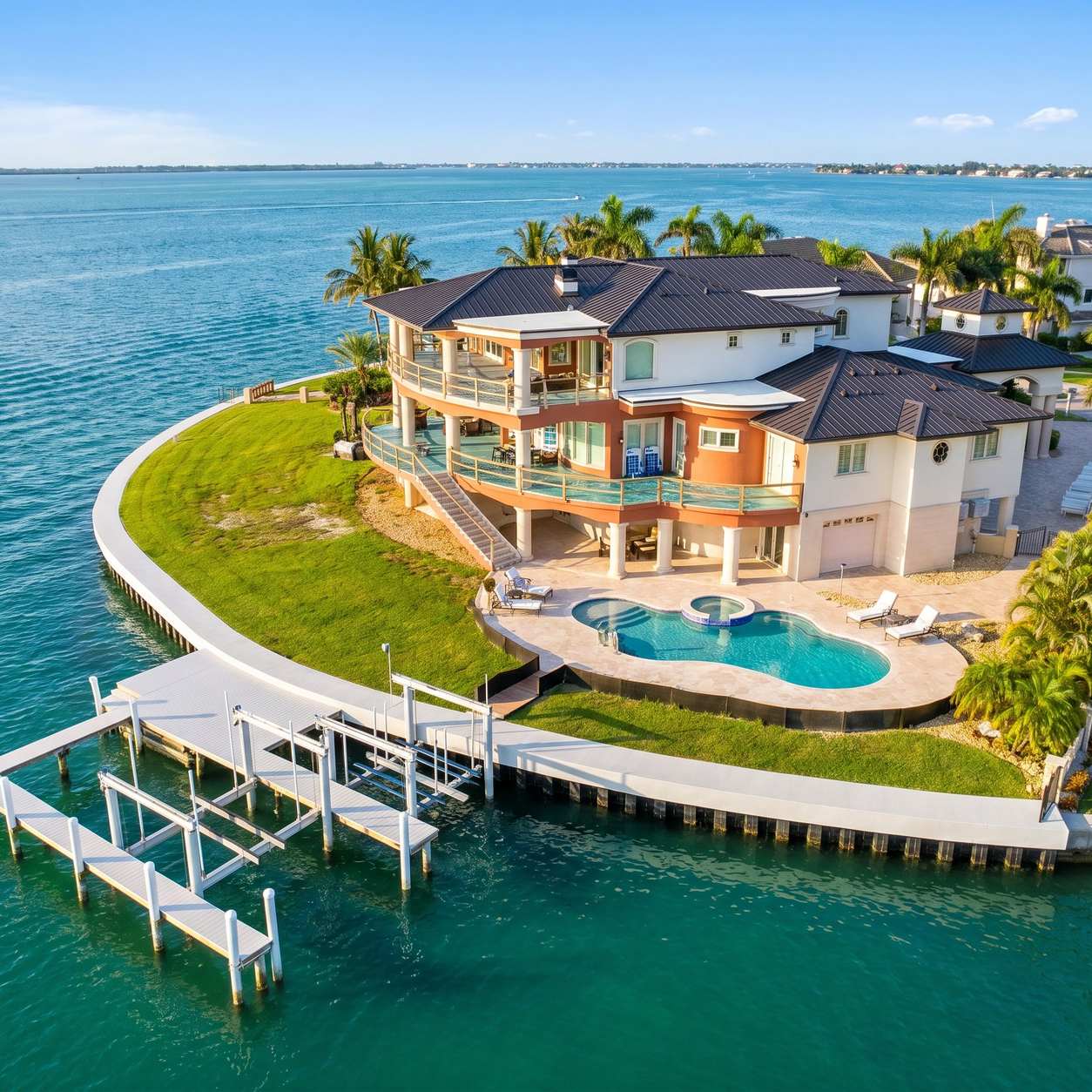
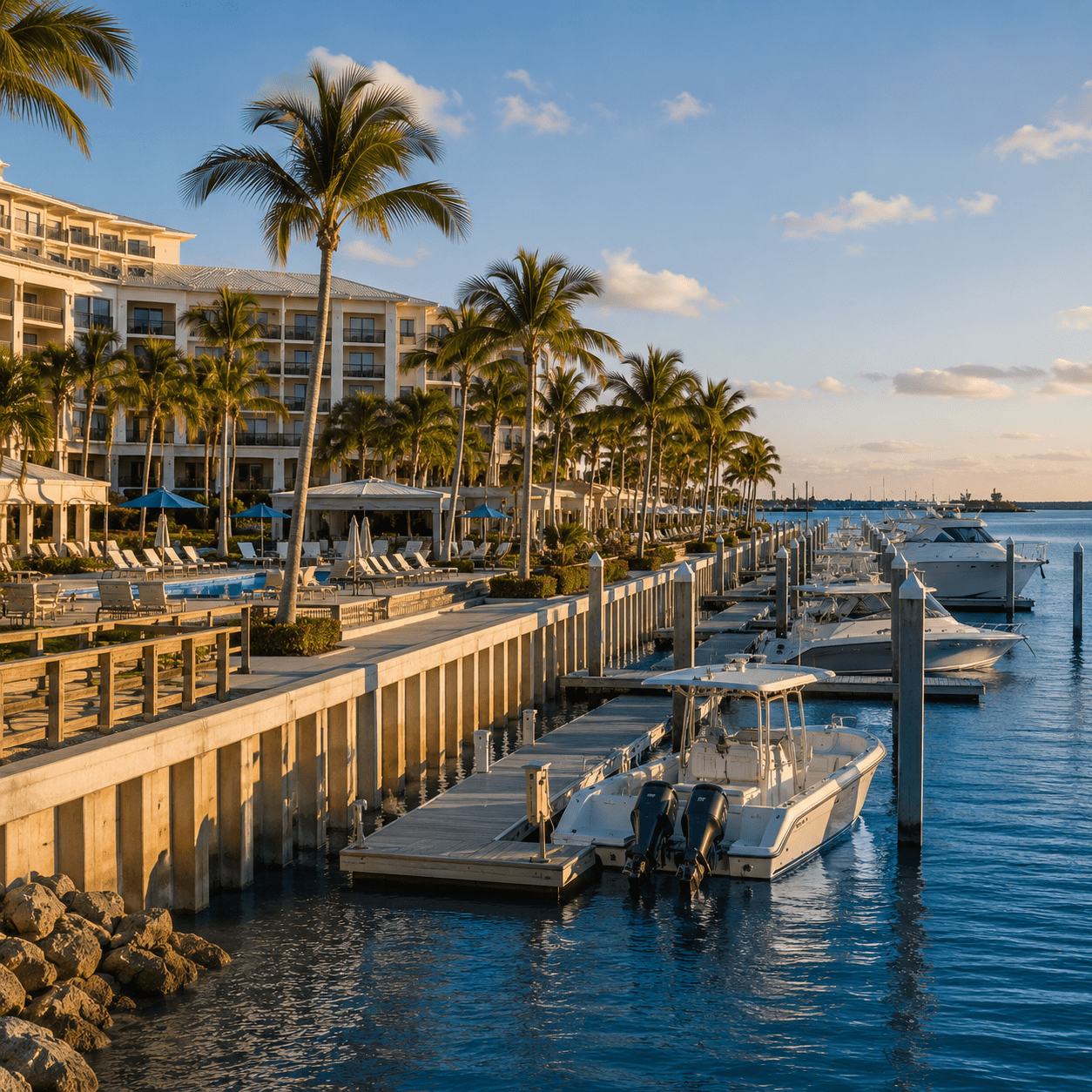
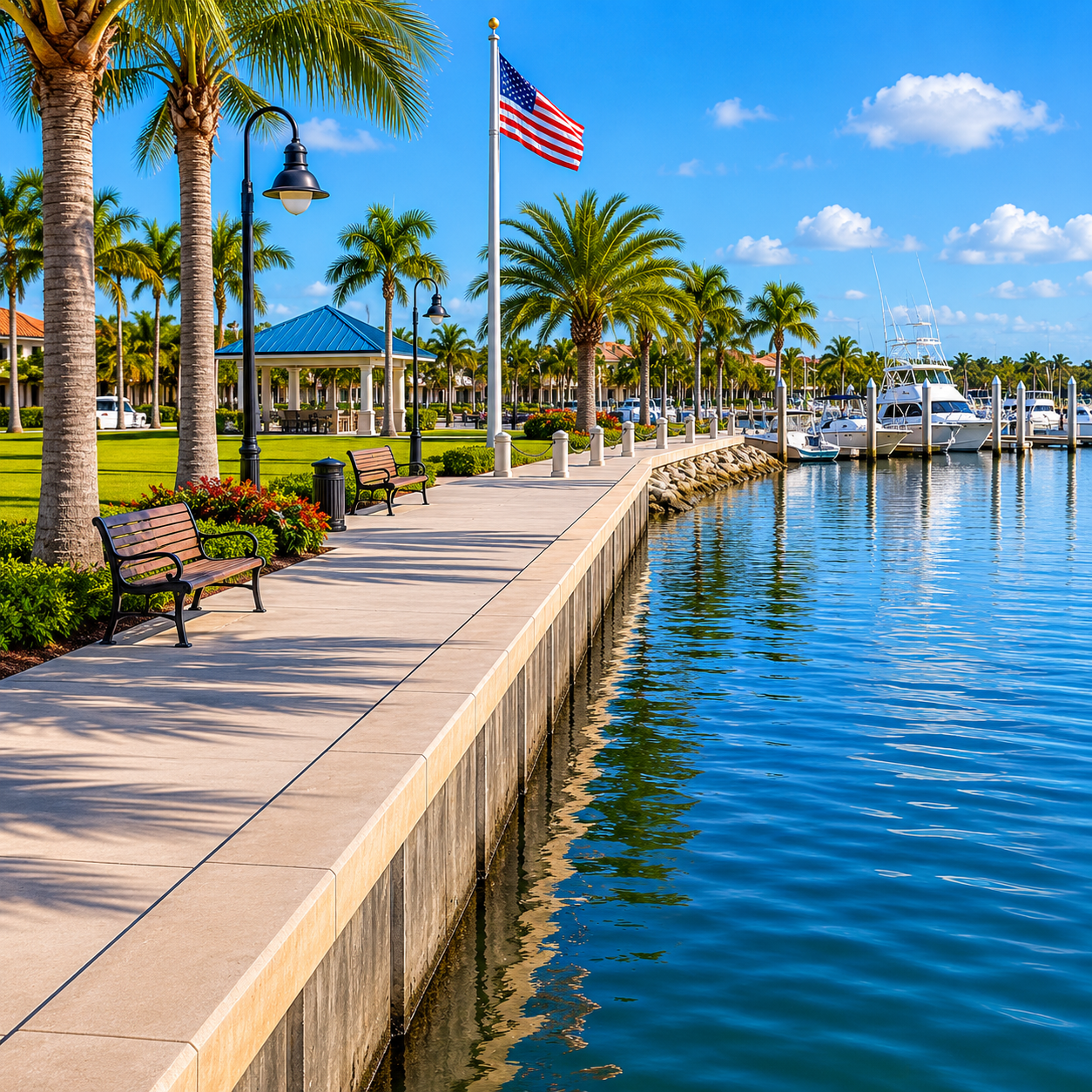
Ultramarine provides dredging services for canal systems, marinas, waterfront communities, and public waterways across a wide range of coastal environments.
Client Stories
What our clients say
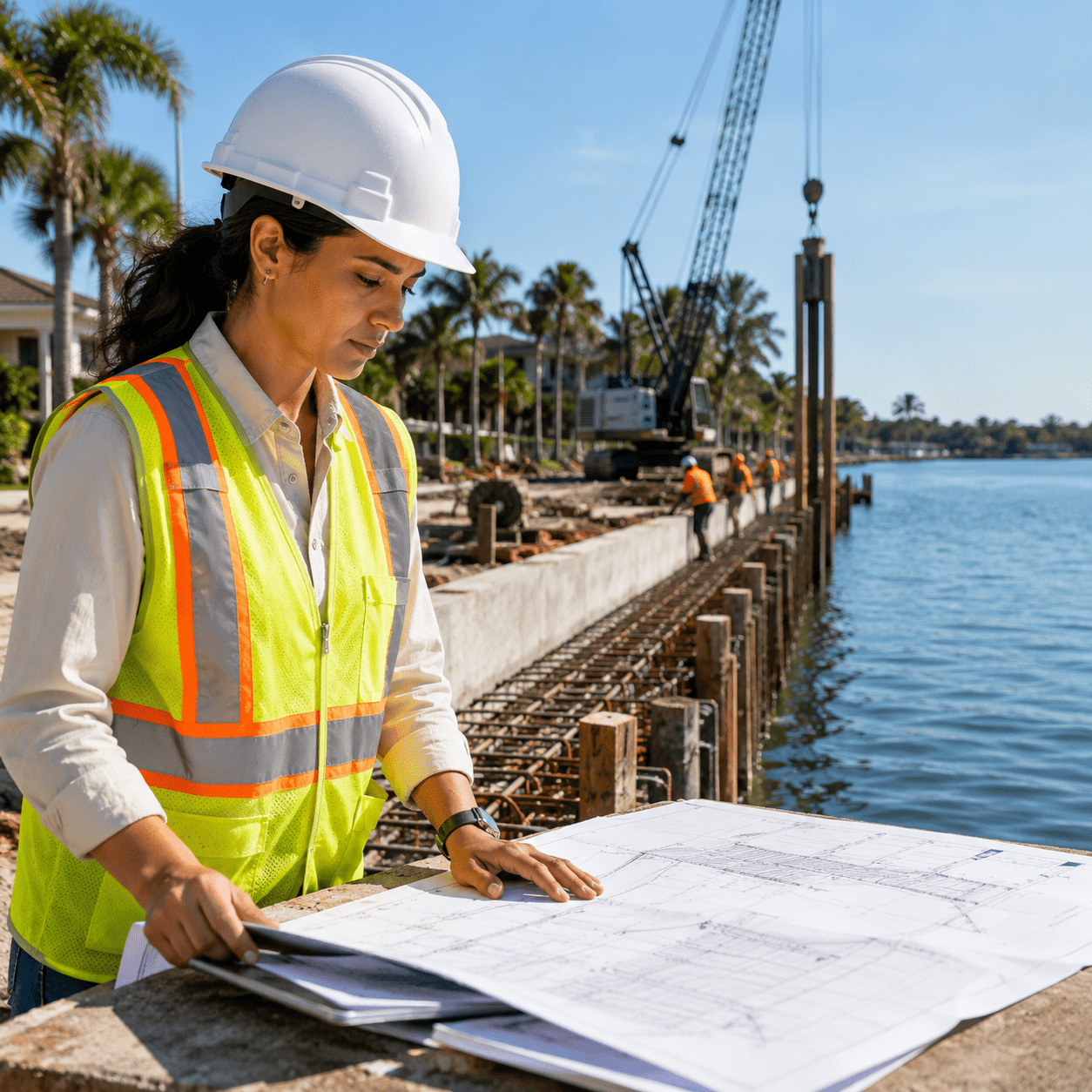
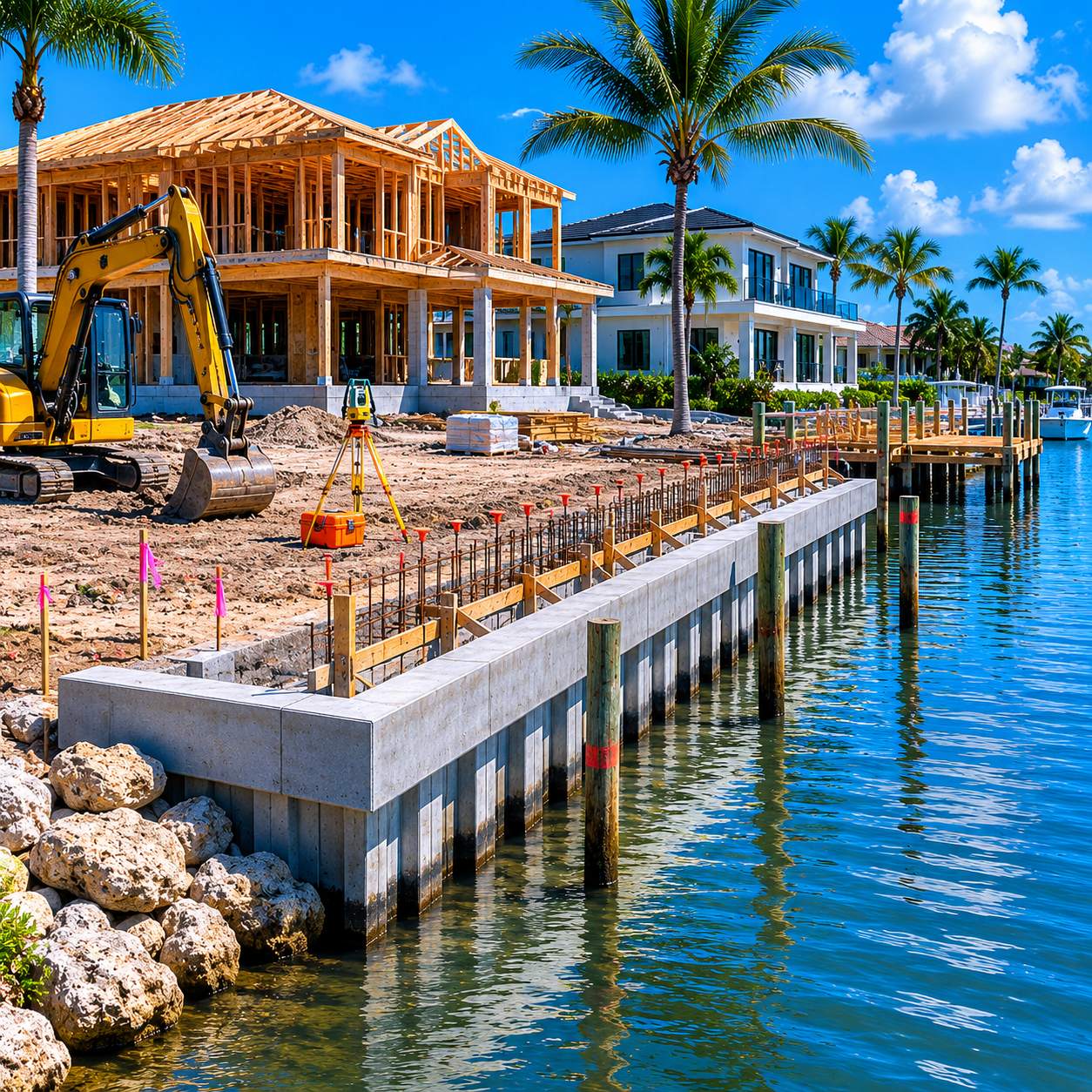
Seawalls, docks, and waterfront infrastructure across Florida — in the words of the property managers, homeowners, and engineers we build for.