The right seawall repair methods can be the difference between a small fix and a full rebuild. For waterfront property owners, fast action protects both the structure and its value. At Florida Seawall Solutions, we handle repairs ranging from minor crack sealing to major stabilization, so small issues don’t turn into costly damage.
Why Do Seawalls Fail?
Your seawall works hard every day. Water, weather, and time all take a toll, creating weak points that grow over time.
Common causes of seawall damage include:
- Soil erosion behind the wall
- Hydrostatic pressure buildup
- Settling or shifting soil
- Environmental wear from tides and storms
Spotting these problems early helps prevent structural failure. Watch for warning signs such as:
- Cracks in concrete panels
- Leaning walls
- Sinkholes or soil loss
- Water seepage through the wall face
If water seeps through during high tide, the seawall is already compromised. That kind of damage needs immediate attention. A crack sealed today may cost hundreds, but the same crack left unaddressed for two years can lead to thousands in repairs if a section of the wall fails.
Seawall Maintenance and Repair Strategies
Effective seawall maintenance and repair strategies fall into two groups: preventive maintenance and corrective repairs.
Preventive Maintenance
Routine visual checks help to catch problems before they spread.
You also need to keep weep holes, relief drains, and filter systems clear so they work properly. A clogged drain does no good at all. Small cracks should be sealed early before water enters and widens them.
Corrective Repairs
Once damage has started, corrective repairs restore what preventive maintenance could not stop. Areas that often need this kind of work include:
- Structural cracks that need injection methods or mechanical stabilization to restore load-bearing strength
- Soil voids behind the wall, which usually grow faster once erosion starts
- Compromised relief systems, since poor drainage causes many seawall failures
Regular maintenance can extend the life of a seawall and remains one of the most cost-effective investments a waterfront property owner can make.
Polyurethane Injection Seawall Repair
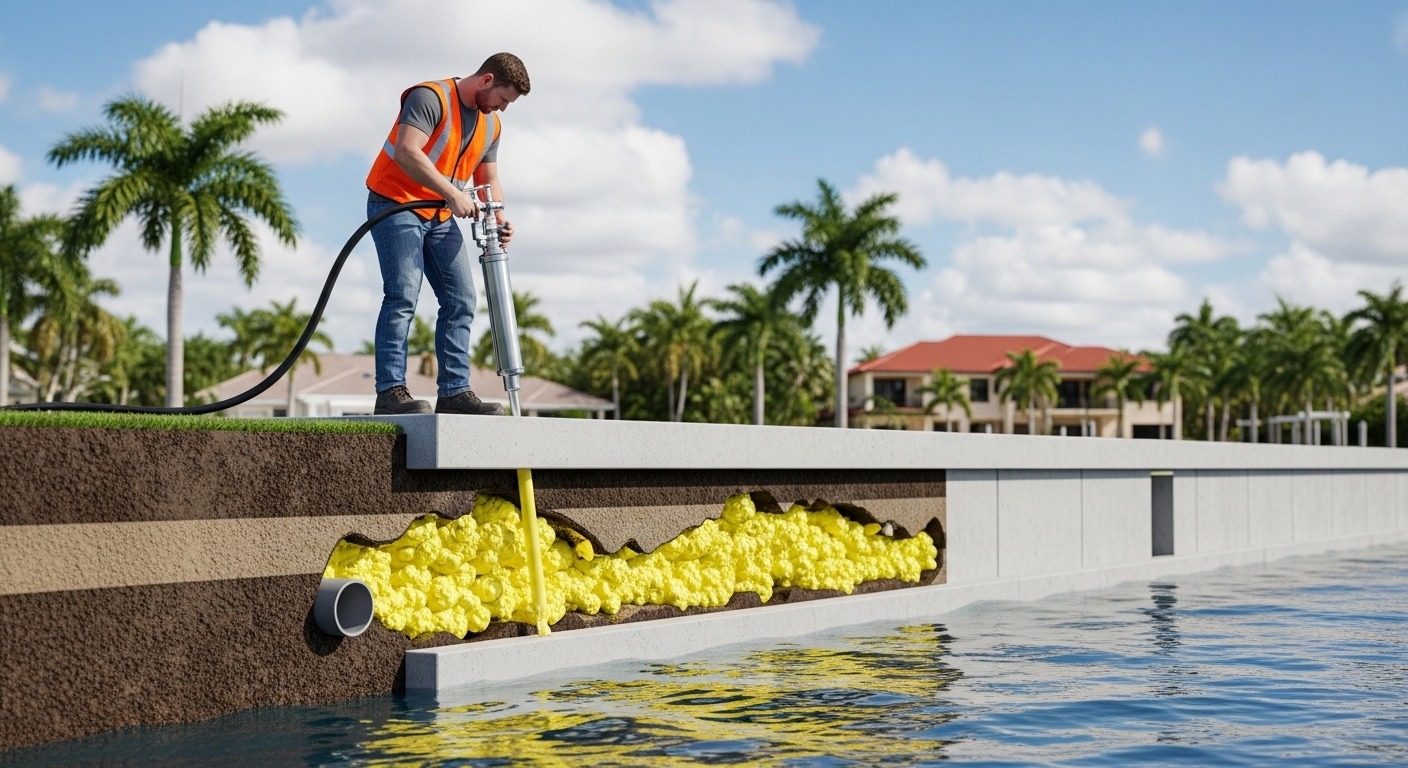
Polyurethane injection has transformed modern seawall repair by offering a minimally invasive solution to complex problems. This method treats both the visible damage and the root cause of failure.
It starts with drilling small access holes into the seawall. Then comes injecting expanding polyurethane foam and letting the material fill voids, stabilize soil, seal cracks, and stop erosion.
Key advantages include:
- Minimal excavation required
- Fast curing, with most projects completed in a single day
- A durable waterproof barrier
- Environmentally safe materials
This method works especially well for soil erosion problems that would otherwise call for major excavation or full wall reconstruction.
Crack Sealing and Joint Repair
Crack sealing is a basic part of seawall maintenance and repair, and different crack patterns call for different solutions.
- Epoxy injection works best for structural cracks when restoring load-bearing integrity is the main goal
- Polyurethane sealants work well for active leaks because they offer flexibility and waterproofing
- Panel joint repair needs flexible materials that preserve joint movement while blocking water infiltration
Panel joints are designed to allow movement, so repairs there need materials that can flex without degrading over time. Modern joint sealants bond well and still allow that movement.
Jet Filters and Drainage Systems
Good drainage is essential for the seawall’s lifespan, and jet filter installation plays a major role. Jet filters allow water to pass through while retaining soil particles, protecting the backfill.
Contractors core drill at specific angles and depths based on soil conditions and the water table. This creates controlled drainage points that relieve hydrostatic pressure without destabilizing the soil. Proper upkeep of this system includes consistent filter inspections, timely clearing of blockages, and ensuring that each component remains positioned in accordance with engineering calculations.
Many property owners do not realize their seawall has a filter system until it fails. When that happens, wider structural damage often follows.
Soil Stabilization Behind Seawalls
The soil behind your seawall provides critical support. When it erodes or settles, the entire structure becomes vulnerable.
Common stabilization methods, which often work best together, include:
- Polyurethane void filling, which expands into erosion voids and forms a water-resistant mass
- Soil compaction, which increases density and load-bearing capacity, works well in sandy soils where conventional methods can fall short
- Geotechnical reinforcement, which adds strength through synthetic materials or chemical stabilization, creates a more cohesive soil mass that resists erosion
Repair vs Replacement Costs
Repairs are usually far more affordable than full replacement. Most repair work ranges from $150 to $500 per linear foot, while full replacement often runs from $600 to $1,500 per linear foot. Repair projects also tend to take one to three days, while replacement can take weeks.
Replacement becomes necessary in cases of severe structural failure, such as major corrosion of steel components or a wall that has shifted far off its foundation. In most other situations, timely seawall repair methods can save your seawall and your wallet.
A professional inspection gives us the information needed to make that decision with confidence. Florida Seawall Solutions will assess the wall’s remaining life, compare repair and replacement costs, and outline long-term maintenance needs before any work begins.
Emergency Seawall Repairs After Storms
Storm damage needs immediate attention to prevent further failure. The immediate aftermath of a storm often dictates a seawall’s fate, determining whether it can be salvaged or must be replaced.
Temporary stabilization comes first. Sandbags, temporary sheet piling, or fast-setting materials can seal major breaches while permanent repairs are planned. Silt fences, erosion blankets, and temporary barriers help keep soil in place until the long-term work starts. A professional evaluation can also reveal hidden damage that could lead to future failure if left unaddressed.
Florida Seawall Solutions has extensive experience with storm damage across Florida. Our teams respond quickly to everything from minor storm surge impacts to major hurricane damage, and we follow rapid-response protocols that prioritize stabilization before repairs begin.
The best storm preparation starts before the storm arrives. Well-maintained seawalls withstand severe weather better and are easier to restore after damage.
Your seawall protects one of your property’s most valuable assets, its waterfront location. A solid understanding of seawall repair methods, paired with prompt action, helps keep this structure sound, protects property values, and reduces the risk of major failure. Whether the work calls for polyurethane injection or basic crack sealing, proper seawall care is a smart long-term investment.
Frequently Asked Questions
How do you repair a seawall?
Seawall repair starts with a damage assessment. From there, we choose the right method, such as crack sealing for minor issues, polyurethane injection for voids and soil stabilization, or jet filter installation for drainage problems. We often combine several techniques to address both visible damage and the underlying cause.
What is the average cost of seawall repair?
Seawall repair costs vary based on the level of damage, the required repair methods, and local conditions. Minor repairs may run around $150 to $500 per linear foot, while major restoration can range from $500 to $1,500 per linear foot. Simple crack sealing may cost a few thousand dollars, while extensive soil stabilization and structural repairs can reach tens of thousands for an average residential property.
How long do seawall repairs last?
Quality seawall repairs using modern methods like polyurethane injection and proper drainage improvements often last 10 to 20 years or more with regular maintenance. Longevity depends on repair quality, environmental conditions, and ongoing care. Some repairs, such as jet filter installation, may last for the seawall’s remaining life when properly maintained.
What material is best for seawall backfill?
The best seawall backfill material is usually clean, angular aggregate such as crushed stone or gravel. This material drains well and resists erosion and settlement.
Can seawall repairs be done in wet conditions?
Many modern seawall repair methods, including polyurethane injection and certain crack-sealing techniques, can be performed in wet conditions or even underwater. Some repairs, such as conventional concrete work or certain soil stabilization methods, require dry conditions for proper curing and performance.